New Learning: Characteristics Of An Innovative Classroom
From content to thought, linear learning to spiral learning, and grading to micrograding, here are possible characteristics of an innovative classroom.

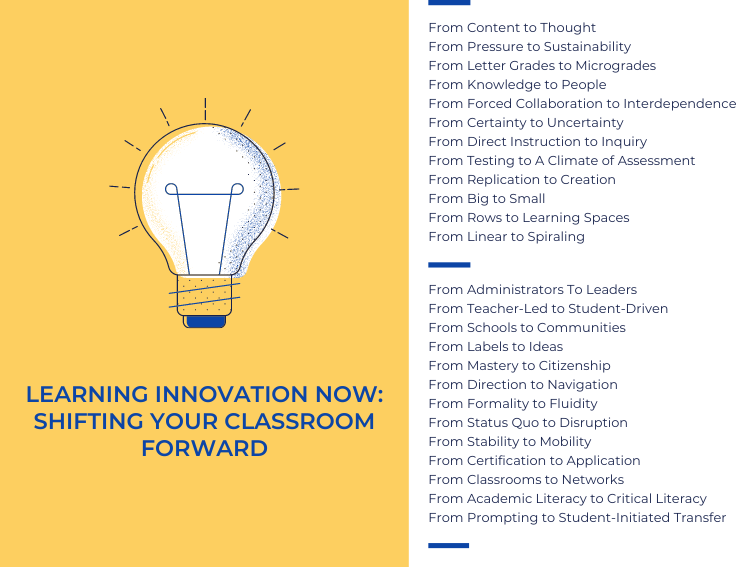
From content to thought, linear learning to spiral learning, and grading to micrograding, here are possible characteristics of an innovative classroom.
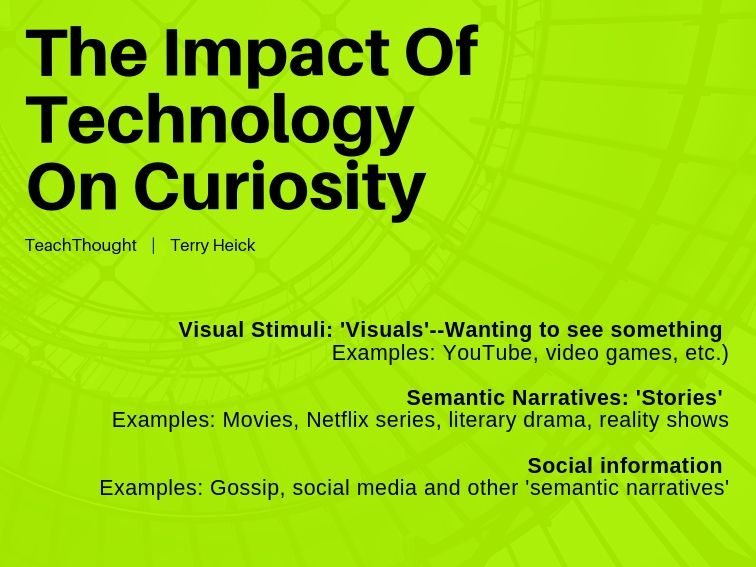
Understanding the impact of technology on curiosity suggests that we first understand the role of curiosity in the learning process itself.
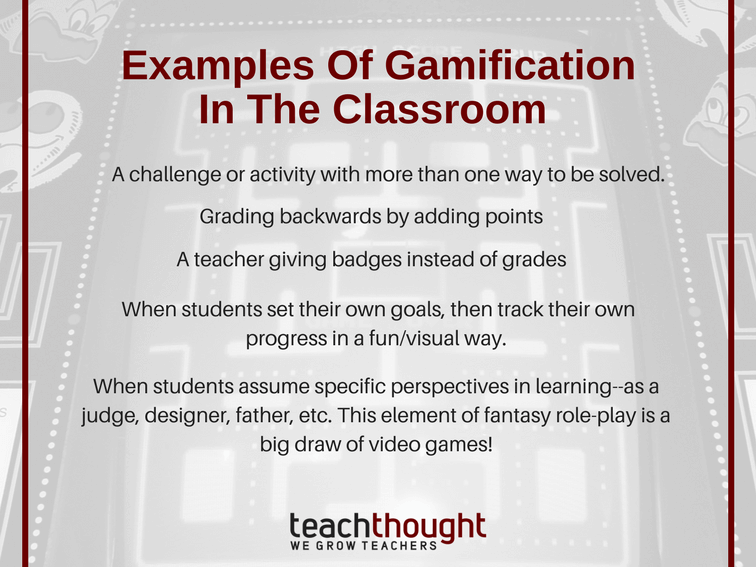
Examples of gamification include additive grading, using levels of progress, creating learning badges or trophies to include, and more.
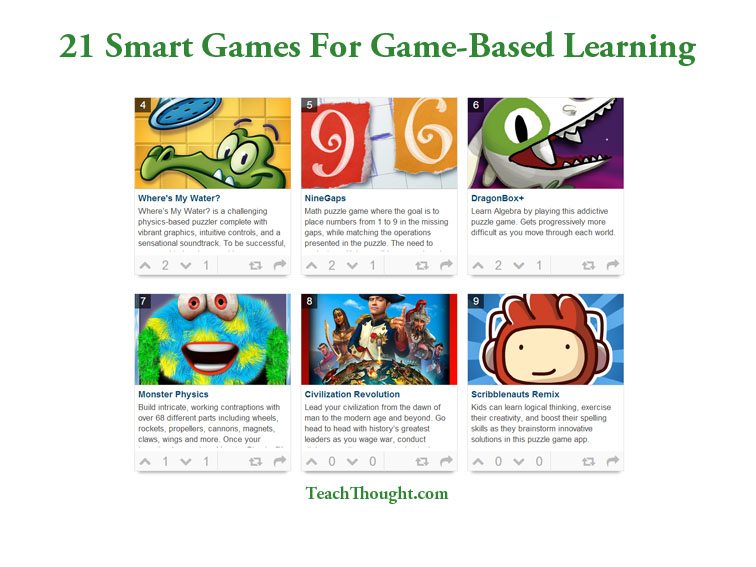
Good candidates for game-based learning games include Portal 2, Civilization VI, Democracy 4, and Assassin’s Creed Museum Tour.
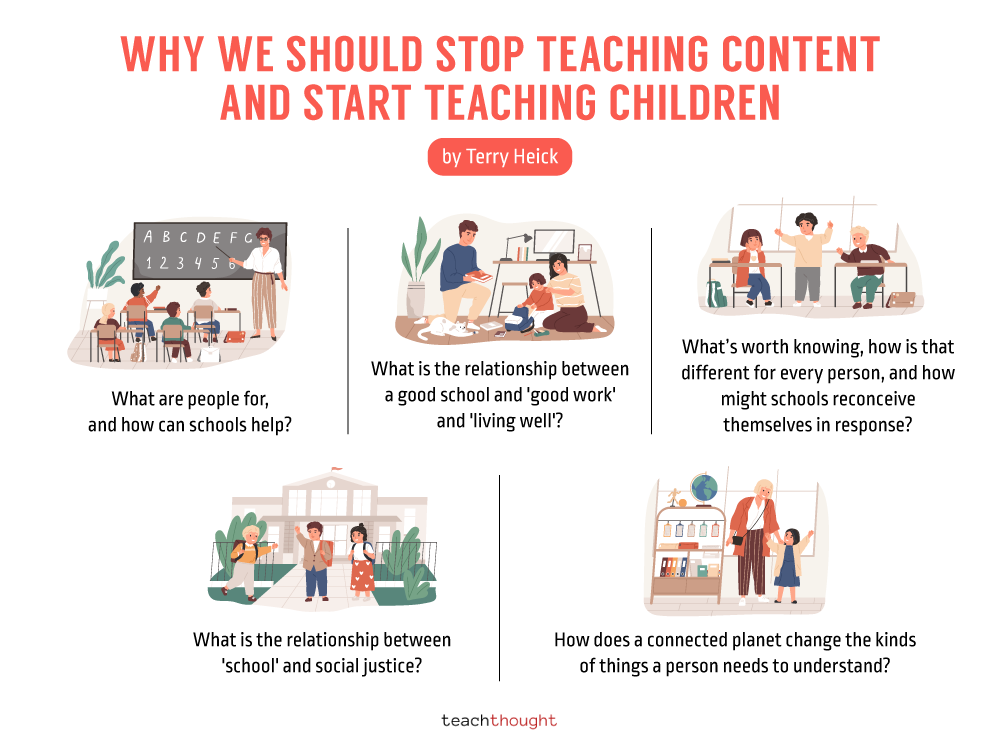
How is education changing? From blended learning to social justice, here are 20 questions to clarify your teaching for 2023.
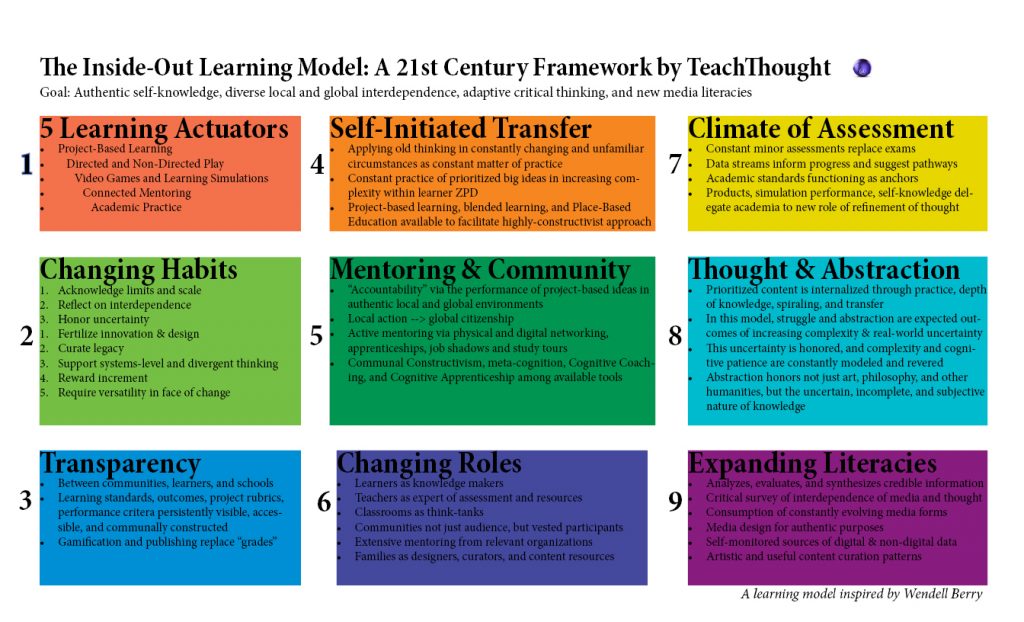
A micro-goal of the ‘Inside-Out’ School is a new kind of ‘intelligence’ where the macro-effect is healthier communities and citizenship.
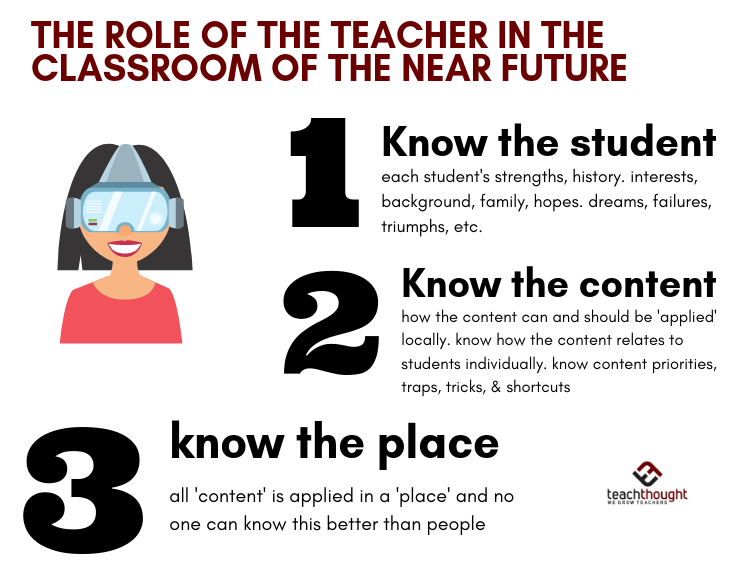
By deciding what stays & what goes in the near-future classroom, what’s worth understanding & what’s not, teachers have quite a bit of power.
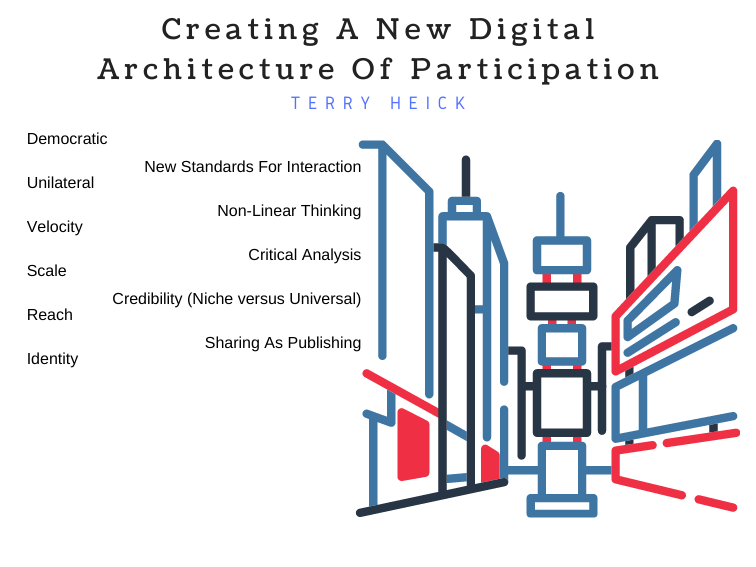
With the explosion of digital media, there are new scales for knowledge-sharing and criteria for the credibility of these ideas.
How can we properly evaluate education technology? What exactly should new tools improve or what exactly should they create?
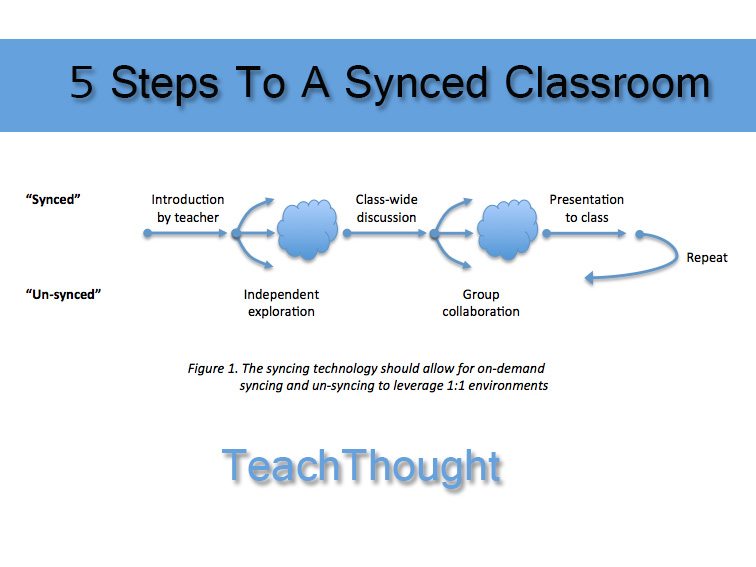
Learning in a synced classroom requires the ability to engage the same core material and the ability to engage the material independently.
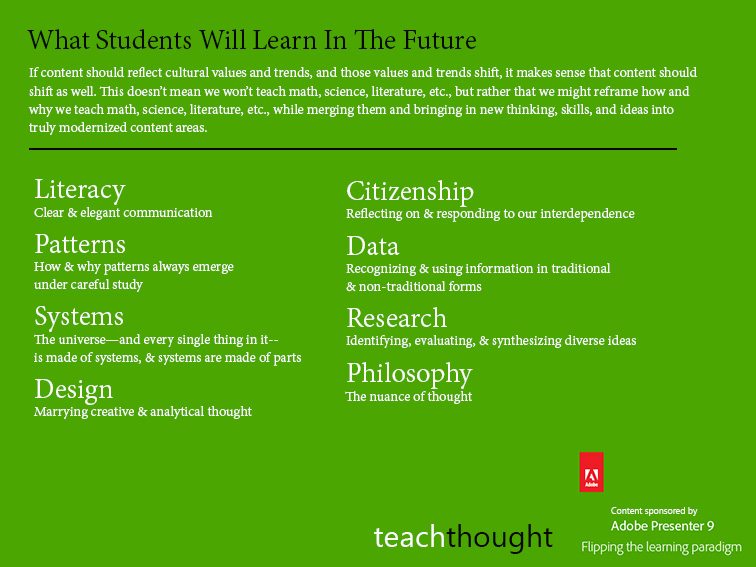
This doesn’t mean we won’t teach math or reading in the future. However, we might reframe what we teach and how and why we teach it.
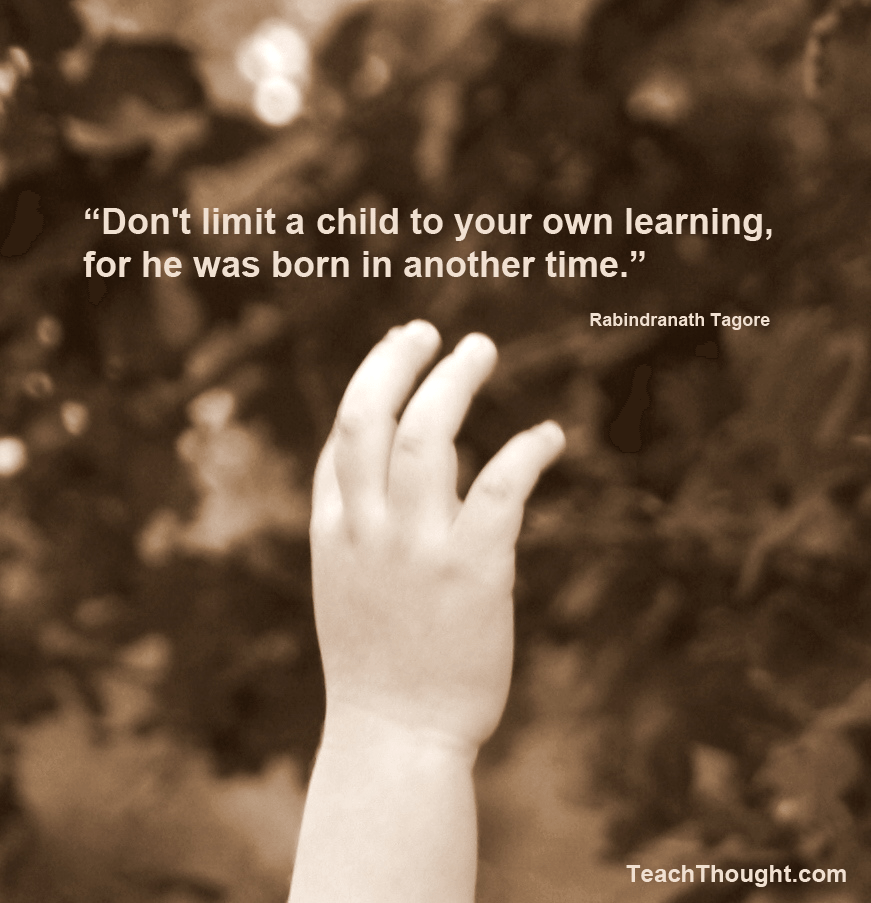
Do not limit a child to your own learning; they were born for another time.
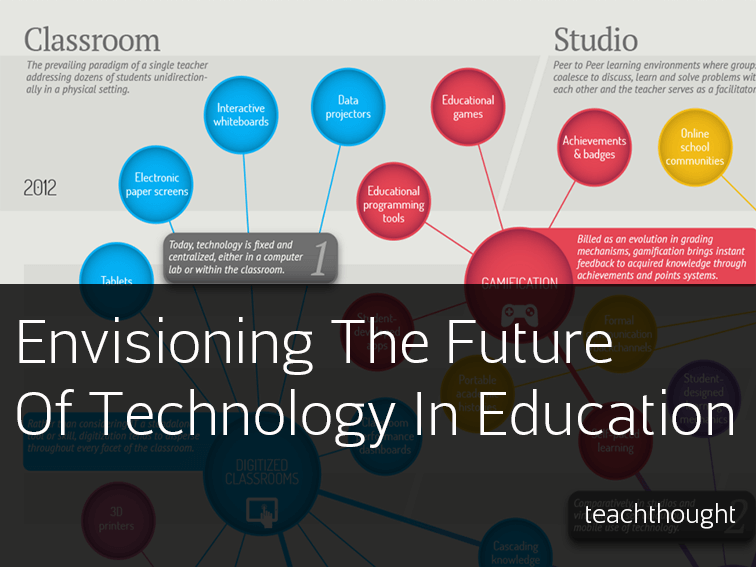
In this particular future of classroom technology, there are three distinct domains/learning spaces: Classroom, Studio, and Virtual.
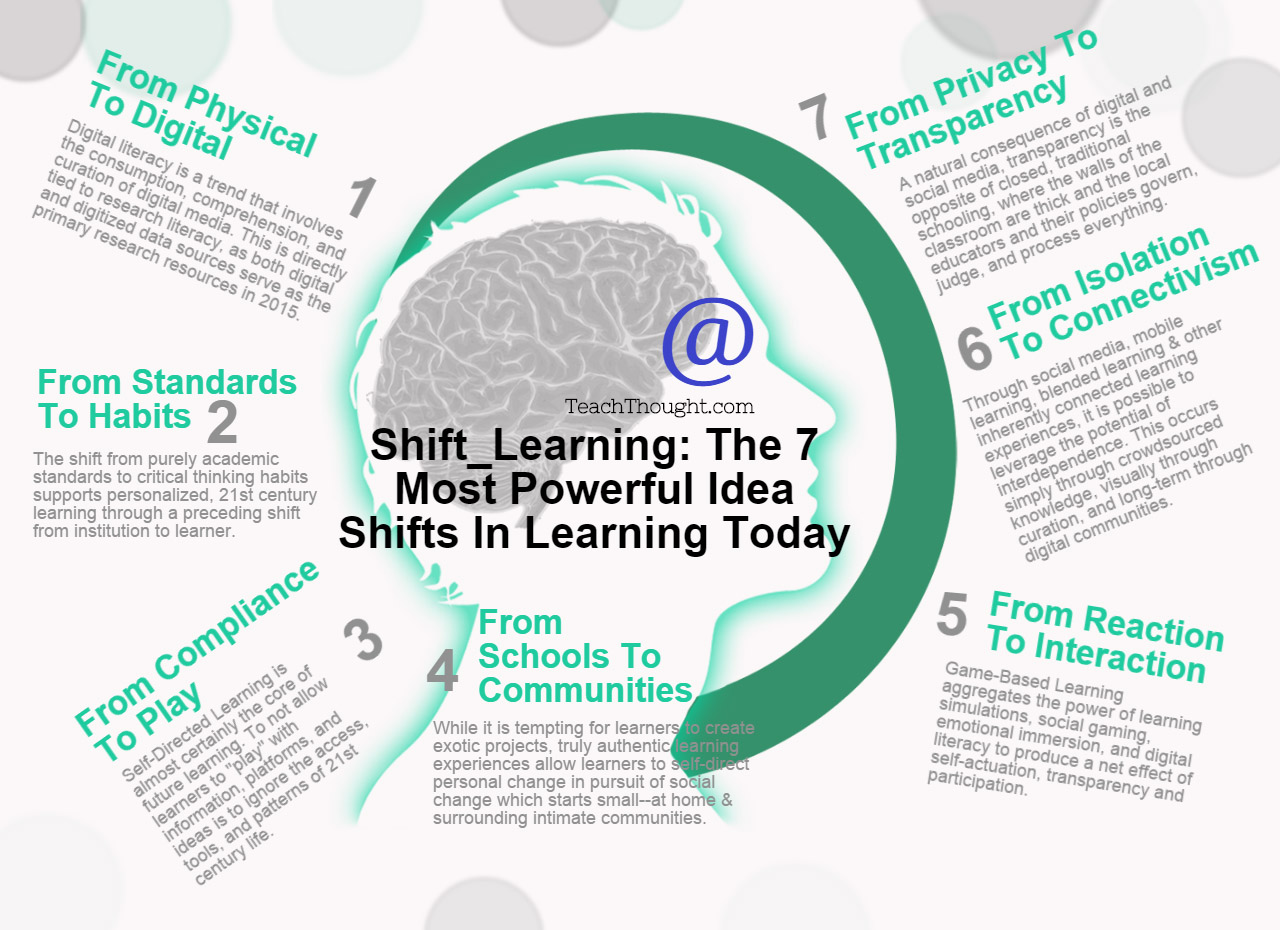
Shifts to create the classroom of the future include a shift from academic standards to learning networks and single modalities to blended.